xKit was never an official product. It was a ghost in the machine, a rebellion coded in JavaScript. And for the golden age of Tumblr on Chrome, it was the only thing that made the chaotic, beautiful hellscape of the dashboard feel like home.

Nevertheless, the saga of "Tumblr xKit Chrome" leaves a profound legacy. First, it is a monument to . A single developer, backed by a passionate community, created more value for Tumblr’s most loyal users than the company did for years. Second, it is a warning about platform dependency . When your user experience relies on a third-party tool held together by duct tape and goodwill, a single update can destroy years of workflow. Finally, it serves as a model for what social media could be : a modular, customizable experience where the user, not the algorithm or the ad server, controls the interface.

In the sprawling, chaotic ecosystem of social media, Tumblr has always occupied a unique niche: a haven for niche fandoms, digital art, micro-blogging, and a specific brand of chaotic creativity. However, for much of its lifespan, the platform’s native user interface was notoriously clunky, under-featured, and actively hostile to power users. Enter xKit , a community-driven, open-source extension initially built for Firefox and Chrome that became less of an add-on and more of an essential organ for the Tumblr body. The story of xKit on Chrome is not merely a technical history of browser extensions; it is a case study in user agency, the fragility of platform-dependent tools, and the enduring tension between corporate ownership and grassroots user experience. The Problem: Why Tumblr Needed a "Fixer" To understand xKit’s importance, one must first appreciate the Tumblr of the early 2010s. The core interface—the dashboard—was a never-ending vertical scroll of posts. Basic features were missing: there was no way to efficiently block spam blogs, no "save drafts" button that worked reliably, no one-click image reblogging, and no way to filter out unwanted tags or content. Reblogging a post added a cumbersome "via" trail that clogged comment sections. For users who spent hours curating their dashboards, the experience was like trying to paint a masterpiece with a broken brush. Tumblr, as a for-profit company, was slow to iterate. Its priorities lay with mobile apps and advertising, leaving the web-based power user base frustrated. The Solution: xKit as a Digital Swiss Army Knife xKit (short for "Tumblr Extension Kit") emerged as the community’s answer. Developed by a volunteer coder named Aviv (studywolf), xKit was a modular collection of over 100 "modules" that users could toggle on or off. When installed on a Chromium-based browser like Chrome, it injected JavaScript directly into the Tumblr page, altering its behavior in real-time.

This fragility highlighted a core tension: xKit was a parasite on a closed system. Tumblr’s parent companies (first Yahoo, then Automattic) had no obligation to support it. In fact, some updates seemed explicitly designed to break third-party tools. The most devastating blow came in 2016 when Tumblr introduced a new, React-based web interface. The update was so radical that it rendered xKit completely inoperable for weeks. The developer, overworked and underappreciated, eventually stepped away. The xKit project was abandoned, only to be resurrected by a new team as —a testament to the community’s refusal to let the tool die. The Legacy: A Cautionary Tale and a Model of Co-Creation Today, the landscape has changed. Tumblr has slowly absorbed some xKit features (like native post filtering and better blocking). Meanwhile, Chrome’s tightening security and manifest V3 restrictions limit the power of content-blocking and page-modifying extensions. The era of radical, user-side customization is waning in favor of walled-garden apps.

Related posts

Tumblr Xkit Chrome _hot_ Online

xKit was never an official product. It was a ghost in the machine, a rebellion coded in JavaScript. And for the golden age of Tumblr on Chrome, it was the only thing that made the chaotic, beautiful hellscape of the dashboard feel like home.

Nevertheless, the saga of "Tumblr xKit Chrome" leaves a profound legacy. First, it is a monument to . A single developer, backed by a passionate community, created more value for Tumblr’s most loyal users than the company did for years. Second, it is a warning about platform dependency . When your user experience relies on a third-party tool held together by duct tape and goodwill, a single update can destroy years of workflow. Finally, it serves as a model for what social media could be : a modular, customizable experience where the user, not the algorithm or the ad server, controls the interface. tumblr xkit chrome

In the sprawling, chaotic ecosystem of social media, Tumblr has always occupied a unique niche: a haven for niche fandoms, digital art, micro-blogging, and a specific brand of chaotic creativity. However, for much of its lifespan, the platform’s native user interface was notoriously clunky, under-featured, and actively hostile to power users. Enter xKit , a community-driven, open-source extension initially built for Firefox and Chrome that became less of an add-on and more of an essential organ for the Tumblr body. The story of xKit on Chrome is not merely a technical history of browser extensions; it is a case study in user agency, the fragility of platform-dependent tools, and the enduring tension between corporate ownership and grassroots user experience. The Problem: Why Tumblr Needed a "Fixer" To understand xKit’s importance, one must first appreciate the Tumblr of the early 2010s. The core interface—the dashboard—was a never-ending vertical scroll of posts. Basic features were missing: there was no way to efficiently block spam blogs, no "save drafts" button that worked reliably, no one-click image reblogging, and no way to filter out unwanted tags or content. Reblogging a post added a cumbersome "via" trail that clogged comment sections. For users who spent hours curating their dashboards, the experience was like trying to paint a masterpiece with a broken brush. Tumblr, as a for-profit company, was slow to iterate. Its priorities lay with mobile apps and advertising, leaving the web-based power user base frustrated. The Solution: xKit as a Digital Swiss Army Knife xKit (short for "Tumblr Extension Kit") emerged as the community’s answer. Developed by a volunteer coder named Aviv (studywolf), xKit was a modular collection of over 100 "modules" that users could toggle on or off. When installed on a Chromium-based browser like Chrome, it injected JavaScript directly into the Tumblr page, altering its behavior in real-time. xKit was never an official product

This fragility highlighted a core tension: xKit was a parasite on a closed system. Tumblr’s parent companies (first Yahoo, then Automattic) had no obligation to support it. In fact, some updates seemed explicitly designed to break third-party tools. The most devastating blow came in 2016 when Tumblr introduced a new, React-based web interface. The update was so radical that it rendered xKit completely inoperable for weeks. The developer, overworked and underappreciated, eventually stepped away. The xKit project was abandoned, only to be resurrected by a new team as —a testament to the community’s refusal to let the tool die. The Legacy: A Cautionary Tale and a Model of Co-Creation Today, the landscape has changed. Tumblr has slowly absorbed some xKit features (like native post filtering and better blocking). Meanwhile, Chrome’s tightening security and manifest V3 restrictions limit the power of content-blocking and page-modifying extensions. The era of radical, user-side customization is waning in favor of walled-garden apps. Nevertheless, the saga of "Tumblr xKit Chrome" leaves
To Serve Man, with Software

To Serve Man, with Software

I didn’t choose to be a programmer. Somehow, it seemed, the computers chose me. For a long time, that was fine, that was enough; that was all I needed. But along the way I never felt that being a programmer was this unambiguously great-for-everyone career field with zero downsides.

By Jeff Atwood ·
Comments
Here’s The Programming Game You Never Asked For

Here’s The Programming Game You Never Asked For

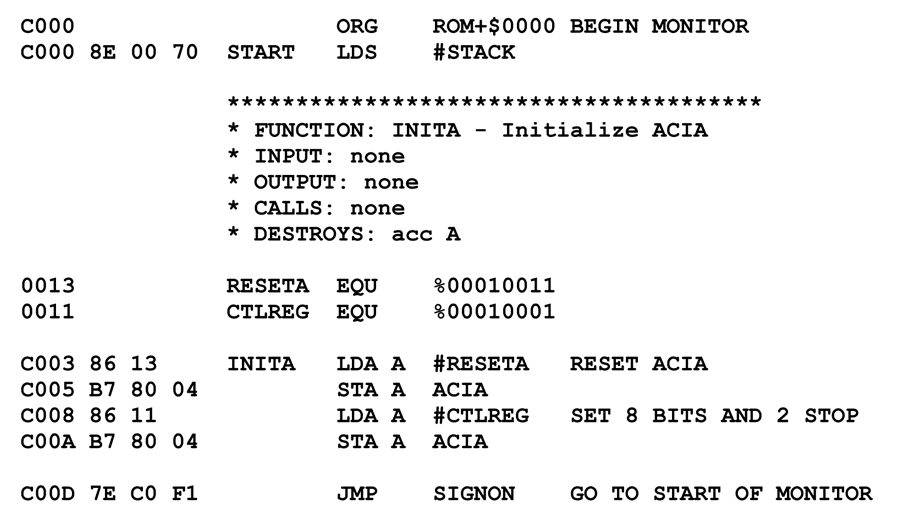
You know what’s universally regarded as un-fun by most programmers? Writing assembly language code. As Steve McConnell said back in 1994: Programmers working with high-level languages achieve better productivity and quality than those working with lower-level languages. Languages such as C++, Java, Smalltalk, and Visual Basic have been credited

By Jeff Atwood ·
Comments
Catastrophic error: User attempted to use program in the manner program was meant to be used. Options 1) Erase computer 2) Weep

Doing Terrible Things To Your Code

In 1992, I thought I was the best programmer in the world. In my defense, I had just graduated from college, this was pre-Internet, and I lived in Boulder, Colorado working in small business jobs where I was lucky to even hear about other programmers much less meet them. I

By Jeff Atwood ·
Comments

Recent Posts

map of the United States via rgmii.org showing all 3,143 counties by rural (gold) / metro (grey) and population

Launching The Rural Guaranteed Minimum Income Initiative

It's been a year since I invited Americans to join us in a pledge to Share the American Dream: 1. Support organizations you feel are effectively helping those most in need across America right now. 2. Within the next five years, also contribute public dedications of time or

By Jeff Atwood ·
Comments
Let's Talk About The American Dream

Let's Talk About The American Dream

A few months ago I wrote about what it means to stay gold — to hold on to the best parts of ourselves, our communities, and the American Dream itself. But staying gold isn’t passive. It takes work. It takes action. It takes hard conversations that ask us to confront

By Jeff Atwood ·
Comments
Stay Gold, America

Stay Gold, America

We are at an unprecedented point in American history, and I'm concerned we may lose sight of the American Dream.

By Jeff Atwood ·
Comments
I’m feeling unlucky... 🎲   See All Posts