Screenshots
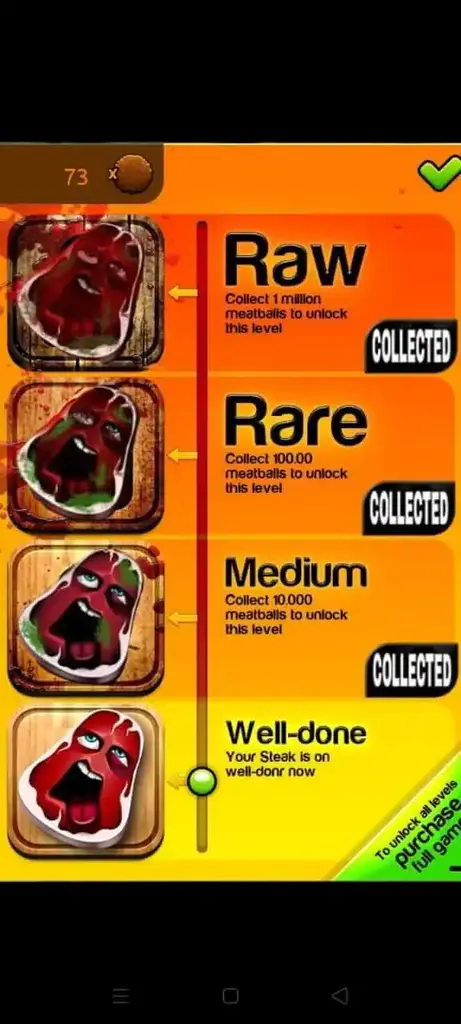
Here are the latest screenshots of the game for you to check the game visuals and settings.





Yet, for all this progress, to declare victory would be premature and naive. The renaissance remains a boutique phenomenon, largely confined to the upper echelons of prestige content and international art film. Walk into any multiplex on a given Friday night, and the landscape reverts to type. The blockbuster industrial complex—superhero franchises, action thrillers, broad comedies—remains overwhelmingly hostile to the mature woman. The few exceptions, such as Helen Mirren in the Fast & Furious franchise or Michelle Pfeiffer in the Ant-Man films, are often cast as matriarchal mentors or villains, their power a static, established fact rather than an evolving journey. Furthermore, a double standard persists with startling tenacity. While male stars like Tom Cruise, Liam Neeson, and Denzel Washington continue to headline action films as they push seventy and beyond, their female contemporaries are offered either supporting roles or independent films with a fraction of the budget. The economic logic is brutally simple: international markets, particularly in Asia, have historically shown a preference for younger female leads, a bias that studio executives are loath to challenge.
Historically, the marginalization of the older female performer was codified into the very structure of the studio system. The classical Hollywood narrative was almost exclusively a young person’s game, driven by courtship, marriage, and the resolution of romantic tension. A male lead like Cary Grant or Humphrey Bogart could age into distinction, their wrinkles signifying gravitas, wisdom, and weathered authority. For their female counterparts, however, aging was a professional death sentence. As the actress and scholar Mady Kaplan noted, the industry’s visual grammar simply lacked a lexicon for the mature female body that wasn't framed as loss or decline. When older women did appear, they were often stripped of their sexuality entirely. Think of the redemptive mother figures in films of the 1930s and 40s, or the comically desexualized busybodies played by Margaret Dumont opposite the Marx Brothers. Even a powerhouse like Bette Davis, who fought tirelessly for substantial roles, found herself in the twilight of her career playing deranged matriarchs in films like What Ever Happened to Baby Jane? (1962)—a film whose horror derives precisely from the spectacle of an aging woman refusing to accept her own cultural obsolescence. Davis’s performance is so potent because it weaponizes the industry’s own contempt, turning the desperation of the forgotten actress into a form of Gothic tragedy. milf wife hotel
On the film side, directors like Paul Thomas Anderson ( Licorice Pizza ’s Alana Haim, though younger, exists in a world where a thirty-something woman is treated as a “grown-up”), Pedro Almodóvar, and Greta Gerwig have pushed boundaries, but the most significant strides have come from auteur-driven projects built specifically for legendary actresses. Pablo Larraín’s Jackie (2016) and Spencer (2021) transformed the biopic by focusing not on the youthful triumphs of their subjects but on their interior disintegration as mature women trapped by iconography. More powerfully, Chloé Zhao’s Nomadland (2020) gave Frances McDormand—then in her sixties—a role of such quiet, radical freedom that it redefined the very concept of a female lead. Fern is not a mother, a widow defined by grief, or a romantic interest. She is a nomad, a worker, a mourner, and a solitary soul whose primary relationship is with the vast, indifferent American landscape. Her age is not a problem to be solved or a tragedy to be lamented; it is simply the condition of her hard-won autonomy. Yet, for all this progress, to declare victory
For decades, the arc of a female protagonist in mainstream cinema bent sharply downward after the age of forty. The ingénue blossomed, the femme fatale schemed, the mother nurtured, and then—for the most part—the screen went dark. The mature woman, if she appeared at all, was relegated to a constellation of thankless archetypes: the nagging wife, the meddling mother-in-law, the asexual grandmother, or the grotesque comic foil. This pattern was not merely an aesthetic choice but a structural feature of an industry that has historically conflated female value with youth, fertility, and a narrow, male-defined standard of desirability. Yet, beneath the surface of Hollywood’s ageist logic, a quieter, more complex counter-narrative has always existed. From the masterfully ambiguous performances of actresses like Katharine Hepburn and Barbara Stanwyck in their later years to the contemporary renaissance driven by streaming platforms and international cinema, the representation of mature women is undergoing a slow, uneven, but unmistakable transformation. This essay argues that while the entertainment industry has made significant strides in recent years, moving beyond reductive stereotypes toward narratives of psychological depth, sexual agency, and unapologetic power, the revolution remains incomplete, still constrained by the persistent economic logic of a youth-obsessed global market. While male stars like Tom Cruise, Liam Neeson,
The contemporary era, particularly the last decade, has witnessed a genuine renaissance for the mature actress, driven by two key forces: the rise of prestige television and the belated influence of the #MeToo movement. The long-form streaming series, from The Crown to Big Little Lies to The Marvelous Mrs. Maisel , has been a crucial vehicle. Television’s extended runtime allows for character arcs that unfold over years, making room for stories about middle-aged and older women that cinema’s two-hour format often deems commercially unviable. Here, we have seen an explosion of archetypes once unthinkable: Laura Linney’s ferociously ambitious Wendy Byrde in Ozark , navigating a criminal empire with icy pragmatism; Jean Smart’s legendary comedian Deborah Vance in Hacks , a portrait of an artist in her seventies who is ruthless, vulnerable, hilarious, and—crucially—still voraciously engaged with her craft and sexuality; and the ensemble of Grace and Frankie , which dared to imagine nonagenarian women as sexual, entrepreneurial, and capable of starting their lives over.
In conclusion, the image of the mature woman in cinema has moved from the margins to a contested center, but the battle is far from over. We have traded the cardboard cutouts of the nag and the saint for a more varied, if still limited, gallery of powerful executives, grieving mothers, and weary warriors. The stories that break through— Nomadland , The Lost Daughter , Hacks —succeed precisely because they refuse the consolations of stereotype. They allow their protagonists the same right that male anti-heroes have long enjoyed: the right to be complicated, unresolved, and gloriously, defiantly human. The next, more difficult step is to democratize this vision, to demand that the economic machinery of global entertainment recognize that a story about a woman in her sixties can be as thrilling, as profitable, and as essential as any explosion in a galaxy far, far away. Until then, the mature woman in cinema remains a work in progress—a portrait slowly emerging from the shadows, still waiting for her close-up.
The slow erosion of this paradigm began, paradoxically, not in Hollywood but in the character-driven landscapes of European and independent American cinema. Directors like John Cassavetes, Ingmar Bergman, and later Robert Altman offered mature actresses something radical: roles defined not by their relation to men or children, but by interiority, contradiction, and raw human complexity. Gena Rowlands in A Woman Under the Influence (1974) and Opening Night (1977) portrayed women in their forties and fifties whose emotional and psychological turmoil was the entire subject of the film, not a sideshow to a younger heroine’s love life. Bergman’s Autumn Sonata (1978) gave Ingrid Bergman (in her final major role) and Liv Ullmann the space for a devastating, almost novelistic exploration of maternal failure and artistic narcissism. These were not “good” or “bad” older women; they were titans of ambivalence. They possessed memory, regret, and a fierce, undiminished capacity for both cruelty and love. These films proved that a mature female protagonist could carry a narrative’s full emotional weight, and in doing so, they laid the groundwork for a later generation of auteurs.
Charlie The Steak
Casual
Mini-games and diverse tools
Rated for 3+
Charlie The Steak
Free
Charlie The Steak is a casual video game for Android, PC, and iOS devices. It comes with unique stress-relief gameplay where players are supposed to beat and torture a piece of steak to have some fun. It was released for iOS by Dynamic Dust in 2013. However, it is now officially available for Android as well.
The game offers an entertaining way for game enthusiasts to relieve their stress by expressing their frustrations on a piece of steak. There are different ways to vent frustrations, including torture, splashing sausages, slicing it with a knife, beating it with a hammer, and so on.
The purpose of Charlie The Steak game is to provide an unharmful and fun way for people to vent their strong or annoying emotions. Furthermore, it doesn't promote violence, rather it is a virtual Rage Room that is used by people to relieve their stress or express their anger and acquire peace of mind.
The gameplay centers around Charlie, a famous character of the game. Basically, Charlie is the name of that steak that gamers are supposed to torture and play with. There are various items available in the game that players can use to beat Charlie and make him give some humorous reactions.
Below is the list of those items players can pick and strike on the steak. Some of these tools are free while some are paid. You can pay and unlock the premium striking objects if you want to speed up your points.
You can explore a few more by simply installing the Charlie The Steak Apk on your Android or its IPA version on your iOS phones. Also, it has a PC version given on the page that you can use to try the game on your Desktop computers or Laptops.
Unique set of tools and objects for players to use to make charlie react uniquely. Each strike of tool/object makes him give a humorous sound.
There are different levels for the gamers to get a unique experience in each level. In each level, players get different tasks, mini-games, and objects.
Controls are placed in a good manner as it helps players to control the gameplay conveniently and smoothly.
Charlie The Steak's ultra-realistic graphics make the gameplay more immersive and fun for the gamers. It offers a naturalistic steak and utensils.
When you beat steak aka Charlie, it generates a funny sound that not only helps you to remove all your strong emotions but also makes you laugh.
This is a freemium game. You can play the game for free but to access all the features you have to upgrade to a paid membership/plan.
Follow this guide to install the game on Android, iOS or Windows Platform:
To install the game on Android, follow the below steps.
To install the IPA file of Charlie The Steak, you need to install any trusted IPA installer like AltStore, FleckStore, or any other trusted app. For further process, follow the below steps.
Before installing the app, you need to open Settings > General >Device Management, and then tap on the Trust option. This will allow you to install the IPA and enjoy the game.
Download and install the game on your PC now by following the given steps below.
Here are the latest screenshots of the game for you to check the game visuals and settings.
Follow these tips and tricks to stay ahead of your opponents:
This game is safe and suitable for everyone. However, before installing the app, you should read the permissions before allowing it. Hence, you can decide easily whether you should give any suggestions or not.
Charlie The Steak is a nice game for venting your strong emotions. Moreover, it is a fun game that enables you to use different kitchen utensils and other home tools to strike Charlie aka Steak to produce witty sounds. It is a free game with several premium features for the players.
You are in the right and safe spot for downloading the latest version of Charlie The Steak Game officially for iOS, PC, and Android. Use the download page to find out the links for both IPA and APK.
It is a video game that features gameplay based on a Casual game genre. Further, it centers around a gameplay where players are supposed to strike a Steak which is known as Charlie. There are different utensils and tools players can use to torture the Steak.
There are multiple tools to hit/play with the steak including a hammer, pliers, knife, dynamite, pan, fire, and more.
Complete Guide on Understanding the process to unlock premium features of the game.
Find all mini-games available to play in the charlie the steak game
Understand why Charlie the Steak is getting noticed and why people are obsessed with it.