OpenRGB's plugin system allows for limitless functionality


OpenRGB provides an expansive plugin interface allowing a wide variety of additional functionality to be added by plugins. Plugins can add additional functionality to the OpenRGB user interface and take control of your OpenRGB devices to provide synchronized effects, use your RGB devices as indicator lights for hardware statistics, integrate with third party lighting control software, schedule OpenRGB lighting profile changes, and more.


OpenRGB Effects Plugin

Synchronize your setup with amazing effects

OpenRGB Effects Plugin

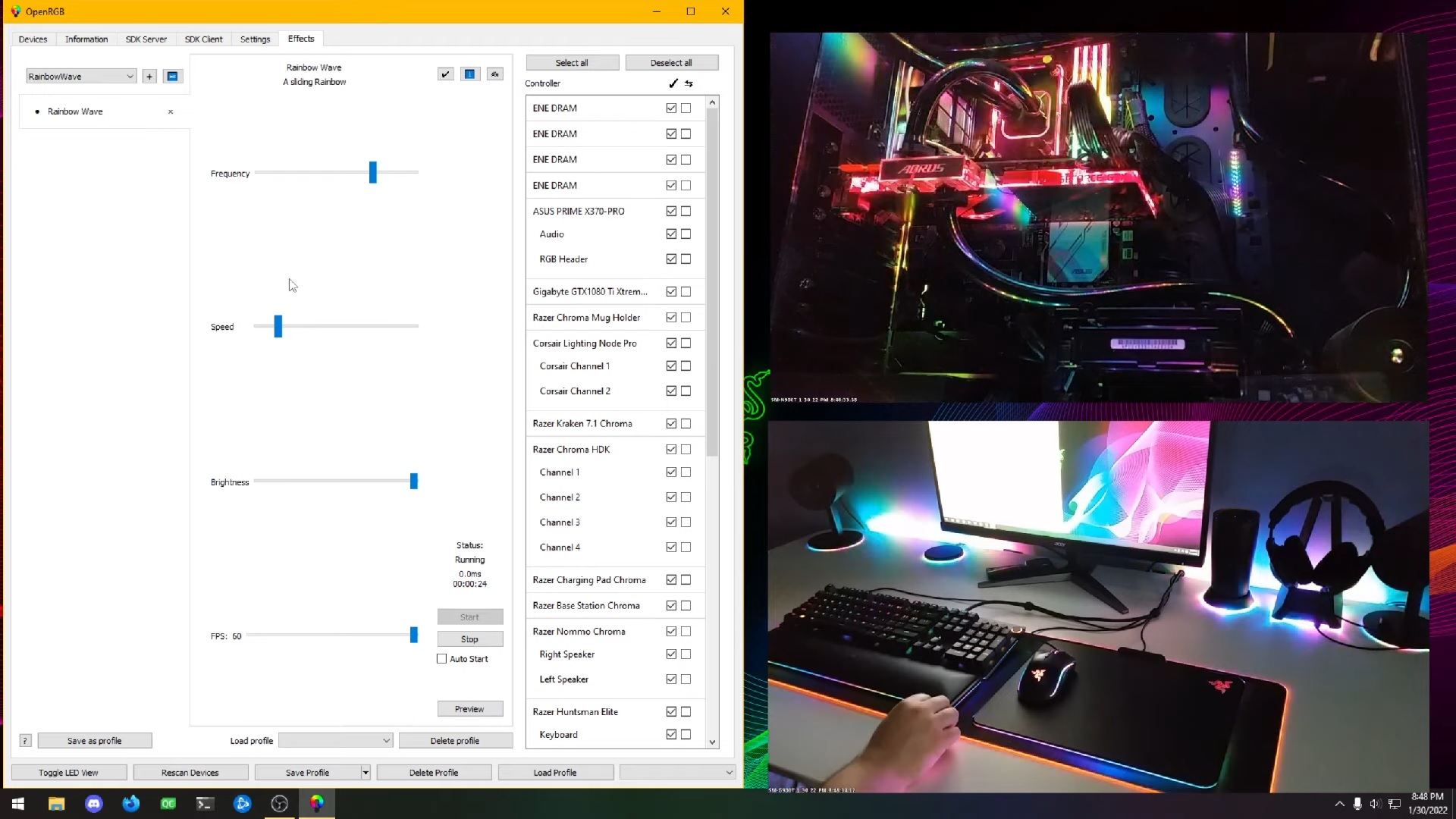
The OpenRGB Effects Plugin provides an extensive list of custom effects that can be synchronized across all devices that support Direct Mode. Many standard effects are available such as Rainbow, Visor, Breathing, and more. Advanced effects include several audio visualizations, Ambilight, GIF player, and a Shader renderer for using GLSL shaders as RGB effects.
More Info and Releases
OpenRGB Visual Map Plugin

Lay out your devices however you like

OpenRGB Visual Map Plugin

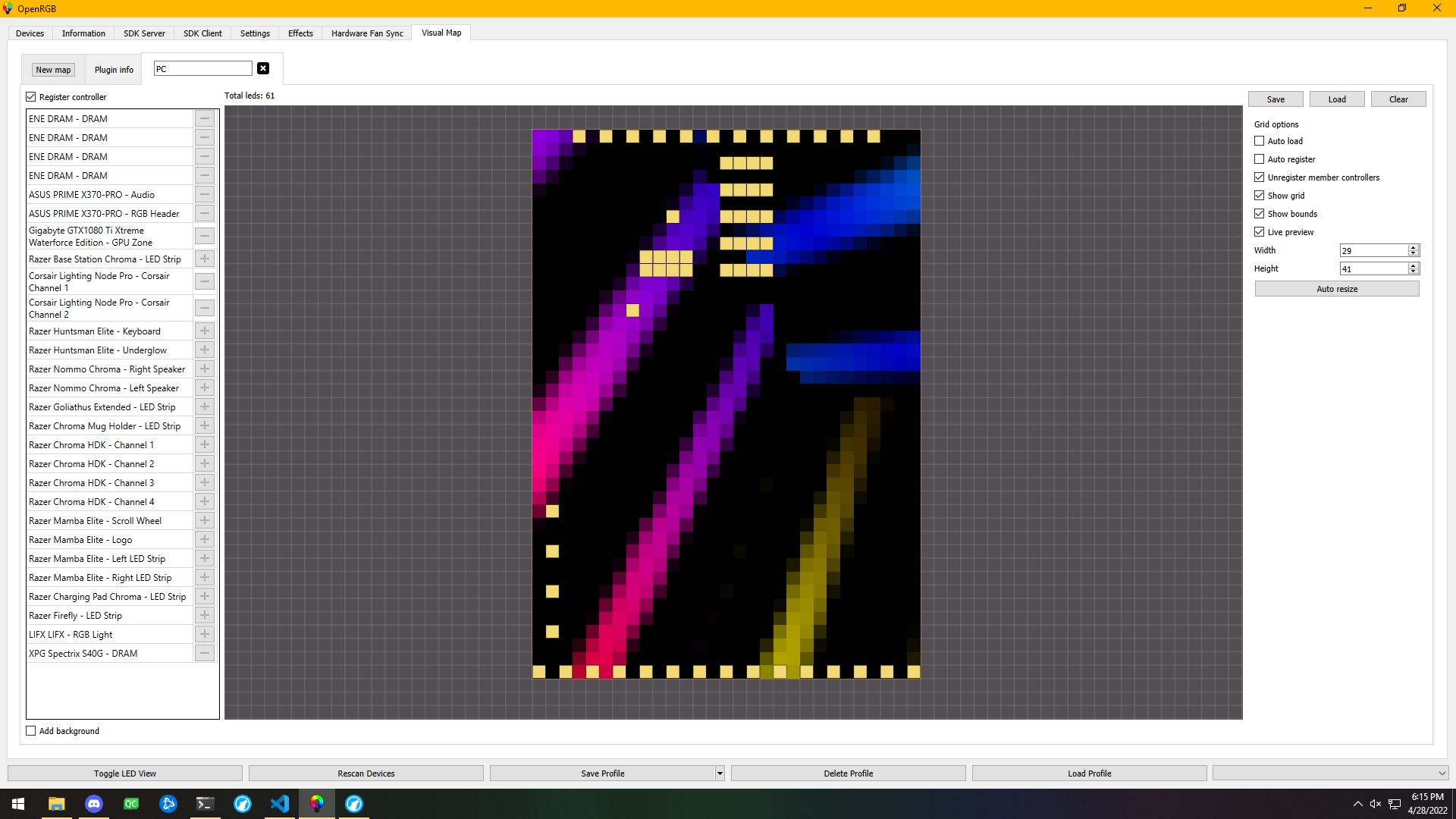
Normally, OpenRGB effects engines apply patterns one device at a time. With the Visual Map Plugin, you can combine one or more devices into a custom grid, allowing incredible effects to shine across your entire setup as one unified display.

More Info and Releases
OpenRGB Hardware Sync Plugin

Visualize system statistics with RGB

OpenRGB Hardware Sync Plugin

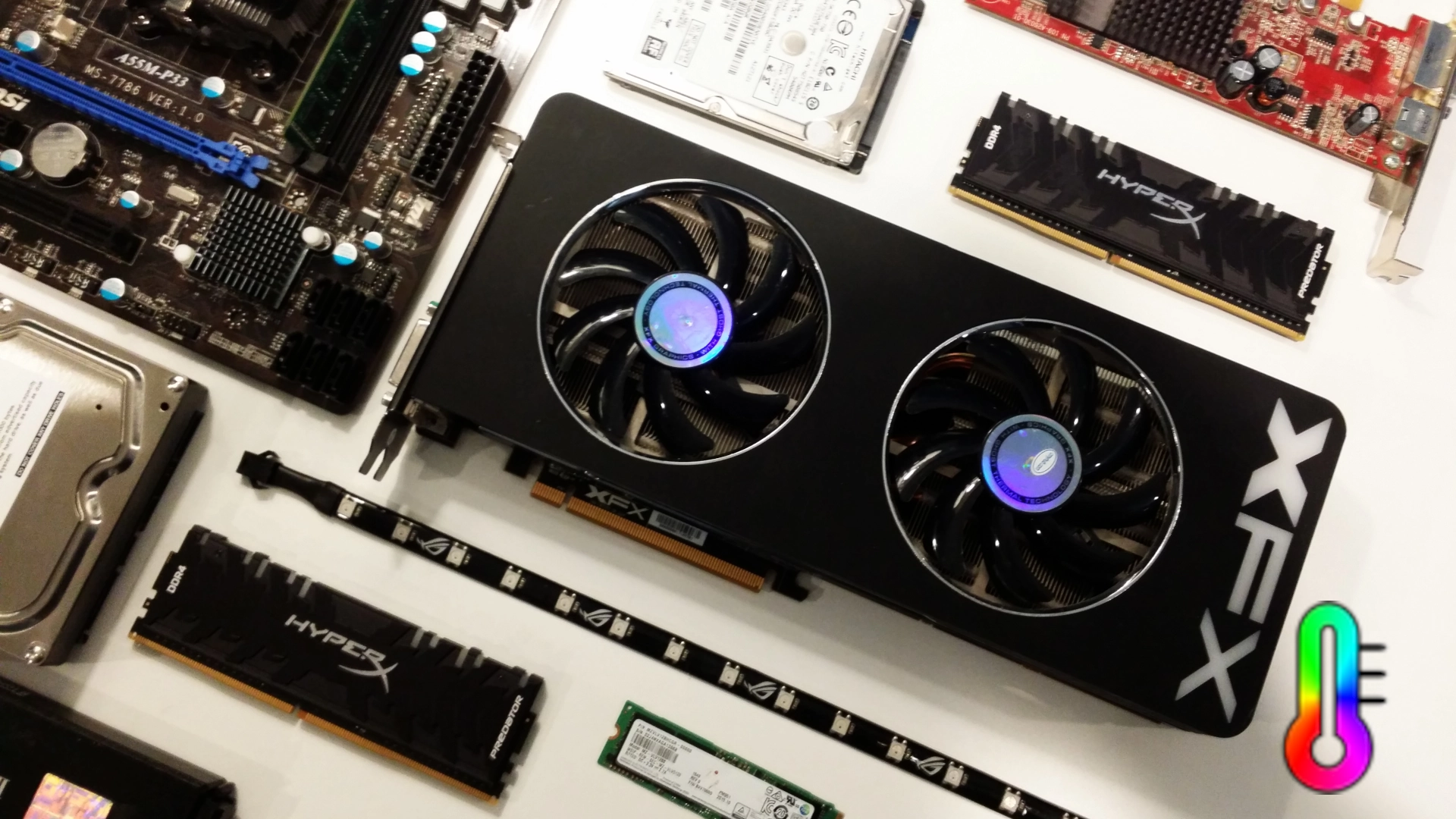
Want to keep an eye on your CPU and GPU temperatures while you're in game? The Hardware Sync Plugin will let you know if your temperatures are too high by changing the color of your RGB. Many more system parameters are supported as well, and multiple devices can indicate multiple measurements.

More Info and Releases
OpenRGB Fan Sync Plugin

Integrate fan control into OpenRGB

OpenRGB Fan Sync Plugin

Controlling all your RGB in one place is great, but what about your fan speeds? The Fan Sync Plugin takes care of that. Using the same backend as the Hardware Sync Plugin, the Fan Sync Plugin lets you map one or more system parameters to control fan speeds, including custom fan curves.

More Info and Releases

Challengers Openh264 |link| -

When Cisco open-sourced its H.264 video codec implementation (OpenH264) in 2013, it was hailed as a major move to democratize video communication. By offering a high-quality, binary-free codec, Cisco aimed to break the patent licensing deadlock that plagued H.264. However, the technology landscape is rarely static. Today, several challengers are emerging to dethrone or circumvent OpenH264. 1. AV1: The Royalty-Free Revolution The most formidable challenger is AV1 , developed by the Alliance for Open Media (AOMedia). Unlike OpenH264 (which still requires patent licensing fees from MPEG LA for commercial use, though Cisco pays for the binary), AV1 is completely royalty-free. Tech giants like Google, Microsoft, Netflix, and Amazon have backed AV1 for web streaming, video conferencing, and cloud gaming. Its compression efficiency is 30-50% better than H.264, making it a direct threat to OpenH264’s relevance, especially in bandwidth-sensitive applications like WebRTC. 2. H.265 / HEVC: The Legal Counter-Challenger Ironically, the next-generation H.265 (HEVC) is both a technical successor and a challenger to OpenH264. While OpenH264 targets the aging H.264 standard, HEVC offers roughly double the compression ratio. However, its adoption has been crippled by complex patent pools—exactly the problem OpenH264 tried to solve. Some industry players are pushing HEVC as a challenger despite its licensing issues, betting that newer, more transparent patent pools will win out over Cisco’s older solution. 3. VP9: Google’s Internal Rival Before AV1, there was VP9 . Google developed VP9 as a royalty-free alternative to H.264/HEVC and has baked it into Chrome, YouTube, and WebRTC. While OpenH264 is a pluggable codec in many browsers, VP9 is often the default for high-quality streams on Google platforms. For developers prioritizing browser-native performance without external binaries, VP9 challenges OpenH264’s “default fallback” status. 4. The Patent Assertion Challengers Not all challengers are technological. Several patent holding companies and law firms have challenged Cisco’s claim that OpenH264 is safe for use under its patent license. For example, MPEG LA and other patent pools have periodically questioned whether Cisco’s “no royalty for binary distribution” model fully covers end users. These legal challenges create uncertainty, pushing some companies to avoid OpenH264 altogether in favor of truly unencumbered codecs like AV1. 5. Real-Time AI Codecs (The Emerging Frontier) Startups and research labs are now developing neural network-based codecs that outperform traditional H.264 in low-bitrate scenarios. While not yet production-ready, AI codecs from companies like DeepRender or WaveOne (acquired by Apple) could render OpenH264 obsolete for real-time communication by 2026–2027. Conclusion: A Shifting Battlefield OpenH264 succeeded in breaking the initial patent logjam, but it is not a permanent solution. The challengers—led by AV1 and followed by VP9 , legal actions, and AI codecs—are rapidly reshaping the video codec market. For developers and enterprises, the question is no longer “Should we use OpenH264?” but “How quickly can we migrate to its challengers?”

Always verify patent licensing status in your jurisdiction. Even open-source codecs carry legal risks. challengers openh264