2.3 MB
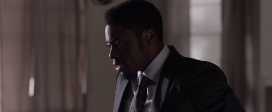
To the casual observer, the plot sounds deceptively simple: an art student, Ben Willis, suffers a breakup and develops chronic insomnia. To pass the long, empty hours of the night, he takes a shift at the local Sainsbury’s-style supermarket, the fictional "Gough’s." But within this mundane setting, Ellis constructs a surreal, romantic, and often melancholic fable. The film opens with a visceral depiction of a heartbreak. Ben (played with poignant stillness by Sean Biggerstaff) and his girlfriend, Suzy (Michelle Ryan), have just broken up. As Ben explains in a voiceover that carries the weight of a eulogy, he discovers that the end of a relationship doesn't just break your heart—it breaks your relationship with time.
The film directly confronts the viewer with this distinction. The loutish character, Matt, represents the vulgar male gaze. When Matt uses a hidden camera to spy on women in the changing room, he is rightly vilified. Ben, by contrast, is a voyeur of form, not function. He wants to paint the soul he imagines behind the skin. The film asks a difficult question: Is it ethical to look at a person without their knowledge, even if the intention is pure art?
Some critics argue the feature is bloated. The scenes with the soccer-obsessed Matt feel like filler. The philosophical monologues of Jenkins, while quotable ("You can speed it up, you can slow it down, you can even freeze a moment. But you can't rewind time. So if you screw up... it's gone."), occasionally tip into pretension. cashback movie
A hypnotic, visually sumptuous meditation on time, art, and insomnia. Not for those seeking fast-paced action, but essential viewing for fans of lyrical, romantic cinema. Rating: 8.5/10
In the sprawling landscape of mid-2000s independent cinema, most films fade into obscurity, remembered only by the most dedicated cinephiles. But every so often, a small, quiet movie arrives that refuses to be forgotten. Sean Ellis’s Cashback is one such film. Originally an 18-minute Oscar-nominated short, expanded into a hauntingly beautiful feature in 2006, Cashback is not merely a movie about a supermarket. It is a meditation on art, loneliness, heartbreak, and the desperate human desire to slow down the relentless march of time. To the casual observer, the plot sounds deceptively
The film also uses silence masterfully. In the frozen moments, diegetic sound (the hum of refrigerators, the beep of the checkout) disappears entirely, replaced by a profound, ringing quiet. This absence of noise forces the viewer into Ben’s headspace. We are not watching him stop time; we are experiencing the solitude of it. It is important to remember that Cashback began as a 2004 short film of the same name. That short is a tighter, more abstract version of the story, focusing almost exclusively on the time-stopping and the nude drawings. It was nominated for an Academy Award for Best Live Action Short Film.
Ellis employs a technique of "time-lapse within freeze-frame." As Ben stands still, the world around him speeds up—lights flicker, shadows move, shelves empty and refill—but the subject remains a statue. This visual oxymoron perfectly captures the film’s thesis: art is the attempt to impose permanence on a temporary world. Ben (played with poignant stillness by Sean Biggerstaff)
The final act of the film, where Ben and Sharon literally stop time to be alone together in the supermarket for what feels like hours, is a masterclass in visual storytelling. They run through the frozen aisles like children in a cathedral. They throw flour into the air, which hangs like frozen snow. They make love not out of passion, but out of a shared understanding of loneliness. It is one of the most achingly beautiful, chaste love scenes in modern cinema. The music of Cashback , composed by Guy Farley, is a character in its own right. It is a minimalist, piano-led score that echoes the works of Michael Nyman ( The Piano ) and Philip Glass. The main theme is a simple, repeating arpeggio that slowly builds in complexity—much like Ben’s understanding of beauty.