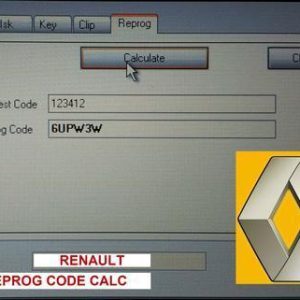
 RENAULT PIN EXTRACTOR 2
£3.99
In case of download problems please contact support. Dismiss
✅ As a writer, you sell barred calls to collect premium while capping your risk. If barrier is hit, you’re off the hook.
*Actually, maximum gain if barrier is not touched = B - K (since the option knocks out if price goes above B, so alive path caps gain at just below B). The premium of a barred call is less than a vanilla call by an amount equal to the rebate (if any) + the probability of knockout times the expected loss of upside. barred call
Max loss = $0.70 If XYZ hits $59 at expiry and never touched $60 → payoff = $4.00, net profit = $3.30 (471% return). If XYZ touches $60 on any day → loss of $0.70. ✅ As a writer, you sell barred calls
Vanilla profit if XYZ=$59 = $4.00 - $1.50 = $2.50 (166% return). Barred call gives higher return for same price move but risks total loss if $60 touched. 13. Frequently Asked Questions Q: Can a barred call be exercised early? A: If European style, no. If American style and alive, yes, but early exercise rarely optimal because you lose time value. The premium of a barred call is less
A: Dividends reduce stock price, lowering chance of touching an up-and-out barrier. So higher dividends increase value of up-and-out call (less knockout risk). 14. Conclusion The barred call (up-and-out call) is a powerful tool for traders who have a directional but bounded view – expecting a moderate rise but not a runaway rally. Its lower premium offers leverage and defined risk, but the path-dependent knockout feature can destroy the position on a brief, unexpected spike.
Use barred calls only when you are confident the underlying will not breach the barrier during the entire life of the option. Never use them in extremely volatile markets or with tight barriers. For most retail traders, a bull call spread (vertical spread) is a simpler, non-path-dependent alternative with similar risk-reward.
Don't have an account yet? Sign up
No items in your cart. Go on, fill it up with something you love!
Start Shopping NowRENAULT PIN EXTRACTOR 2RENAULT PIN EXTRACTOR 2